Agriculture in Nigeria has greatly improved in the past few years because of the advent of technology
and other necessary infrastructures.
Initially, most Nigerian farmers merely engage in subsistence farming to provide food for
their family while very little is made available for sale.
Growth in agricultural output has no doubt been on the rise as
farmers are stepping away from subsistence agriculture and embracing modern civilization – investing in
large scale farming and ultimately increasing agricultural yields
The Nigerian soil and the climatic condition is very suitable for the production of wide verities of crops,
there are over a hundred different food crops produced by farmers in Nigeria on a yearly basis which includes yam, maize, millet, sorghum, beans,
potatoes, rice, onions garbage, carrot, pear, cocoa, cocoa yam, okra, vegetables and very many others
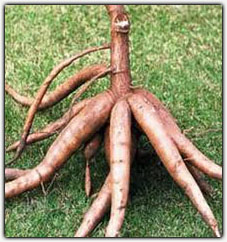
Nigeria is the world number 1 producer of cassava… Cassava farming has taken the center stage in Nigeria and contributes over 45 percent of Nigerian agricultural GDP. Agriculture in Nigeria contributes merely about 20 percent of
the Nigeria total GDP, trailing behind petroleum which is the major Nigerian domestic produce.
Although Nigeria depends heavily on the oil industry for its budgetary revenue it is believed that if the
agricultural sector is properly managed and enhanced, it would greatly boost the country’s gross domestic product and even replace oil
on the top of the list, considering the vast area of land that is unused in Nigeria.
In 1990, it was speculated that about 82 million hectares out of Nigeria’s total land area of 91 million hectares were
found to be arable, and merely 42 percent of this cultivable area was farmed. Much of this land was farmed under the bush fallow
system, a process whereby land is left idle for a period of time to allow natural regeneration of soil fertility and replacement of
soil nutrient.
It is believed that the agricultural sector is one of Nigeria’s potential source of revenue that is yet
underdeveloped and unexplored.
Animal rearing in Nigeria
Agricultural practices in Nigeria also include the rearing of animals for meat production and
animals that serves as beast of burden – aides in the transportation of goods and man.
Livestock farming is a very important aspect of agriculture in Nigeria, the Nigerian community depend mostly on
meat from cows and chicken. Meat in Nigeria is an important part of the
Foods in Nigeria,
it suitable to say that Nigerians don’t cook foods without meat or fish.
the kind of animals reared in Nigeria includes – Cow, Goat, Sheep, Cattle, Pig, Horse and several others
while poultry birds includes
chicken, turkey, duck, pigeons and others
Problems of Agriculture in Nigeria
Agriculture in Nigeria could use a little push at strategic points if success is to be achieved, there is a need for the
education of farmers, most farmer in Nigeria who engage in subsistence agriculture have very little
knowledge of the operational method of the improved agricultural system
If farmers in Nigeria are provided with the necessary tool and adequate resources,
there would be gross improvement in Nigerian agricultural sector;
the land would be properly utilized and this would greatly reduce the high level of food stuff importation and ultimately increase employment rate.
There are lots of problem hampering the production of food crops in Nigeria and rearing of animals, chiefly among
them is electricity. Over 40 percent of Nigeria perishable goods get spoilt after harvest due to the lack of electricity
needed for the storage and processing.
Electricity is needed
for the running of large farm equipment, most Nigerian farmer simply chose to stick with manual labor as the
cost of running machines with alternative
source of power is often steep.
Another problem facing agriculture in Nigeria is the lack of good roads needed for the transportation of harvested crops
from the farm land to the main roads, most farms in Nigeria are located about a mile away from the main road and the
only entrance to these farms are mostly a path beaten by the foot of men.
Nigeria Farmers also encounter the problems of funds needed for running a farm and construction of farm houses and
proper storage system.
Way Forward for Nigeria Agriculture
If the government of Nigeria and the ministry of agriculture would intervene in solving the problems of farmers in Nigeria,
it is believed that by 2020 the country would witness a gross decrease in the importation of food stuffs and animals. With good
planning and the needed resources, Nigeria has what it takes to multiply her GDP just with cassava products alone.
This is a very interesting article about
Fish Farming in Nigeria, learn to construct a fish pond.
Job Opportunities in Nigeria
if you are looking to improve your monthly income.
Read more on Physical Map of Nigeria and
Nigeria Climate
Compare Agriculture In Nigeria & Other Nigerian Facts
Agriculture alone have the capacity to boost Nigeria’s GDP. Thanks for this article, really good and helpfull.